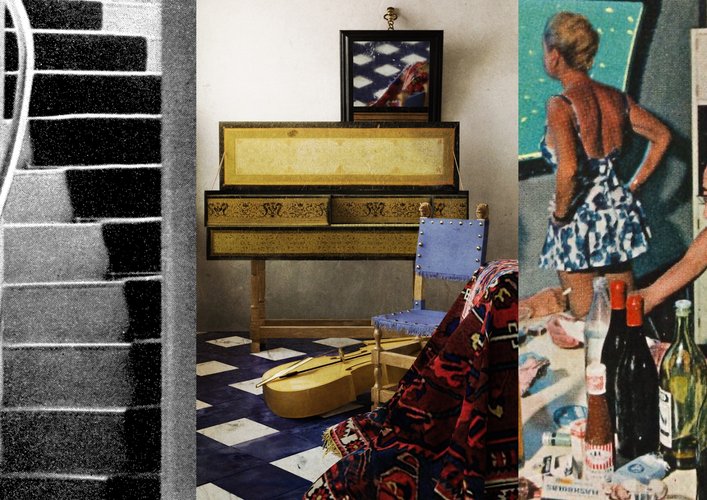
Experiencing the Domestic
How can architectural historians still contribute to studying domestic environments by considering the stories, impressions, and experiences of those who dwell in or pass through them? Can we comprehend a space through such subjective experiences? What are the potentials as well as the limits of such approaches to historiography? And how can we reconstruct spatial histories from textual or oral traces beyond drawings or visual evidence? While studies on domestic space, domesticity, and housing proliferate, these remain central themes in our discipline and beyond, with the term “domestic” acquiring diverse and ever-changing meanings over time. After completing our first four-year project with a Field Note article in AH, reading domestic interiors through a synchronic object–media lens, this Interest Group session investigates domesticity from a subjective perspective: that of those who have imagined, encountered, or lived in such spaces, from shoppers to migrants, but also developers, labourers, tourists, artists, writers, and more. The session is open to all chronologies and geographies and is especially interested in thinking through the following ideas:
• Alternative understandings and definitions of the domestic that come from personal and experiential perspectives on architecture, including examples of interior adaptation and subjective views of space.
• Methods and approaches to the study of domesticity that allow us to rethink spaces seen as “domestic” (narrative, oral history, drawing, digital work…).
• Historiographical and/or theoretical challenges in dealing with subjective (hi)stories and the potential divergences emerging from the narrator’s experience and the author’s positionality.
Our upcoming EAHN meeting in Aarhus aims to open up new directions for investigating domestic space. To this end, we ask participants to offer insights into their research and methods by bringing along either a draft or portion of a text that they are working on, or any other piece of primary material (e.g. image or other) that we can use to interpret or problematise as “domestic” and discuss its potential contribution.
Roundtable Program
11:00 Welcome and Introduction by SIG Coordinators
11:15 Short Presentations of Research Material by Participants
12:45 Lunch Together
13:45 Roundtable Discussion for Future Publishing Strategies and Opportunities
15:00 Closing and Informal Networking
Coordinators
Gregorio Astengo (IE University)
Rebecca Carrai (KU Leuven)
Contributing Members
Guillermo S. Arsuaga (Princeton University)
Charlotte Rottiers (ETH Zurich)
Janno Martens (KU Leuven)
Roxanne Goldberg (ETH Zurich)
Yosuke Nakamoto (ETH Zurich)
Alborz Dianat (University College Dublin)
Filippo Fanciotti (EPFL Lausanne)
Hide and Seek: Where are the Children in Architectural History?
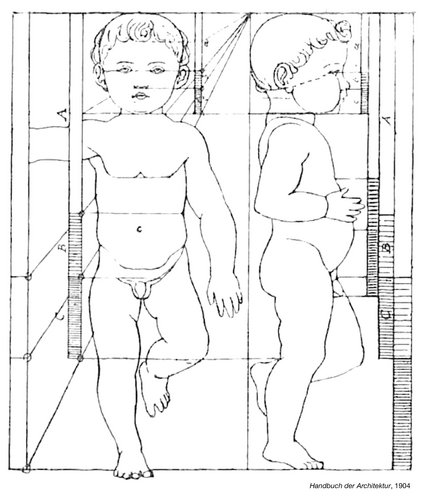
This workshop aims to foster a critical discussion, both thematic and methodological, on the role of childhood and children in the built environment. Children, despite their visibility in architectural design and discourse, remain largely unaddressed in architectural historiography, having often been confined to a domestic and feminine sphere, stereotypically regarded as of lesser importance. At the core of the workshop lies the question of how children’s perspectives and lived experiences might inform architectural history and, more broadly, architectural research. How have children been addressed in architectural historiography? What does a child-centered perspective mean in architectural history? What are the challenges of writing an architectural history of childhood? By engaging with these questions, the workshop interrogates the historical visibility of children in architectural discourse while fostering scholarly exchange and interdisciplinary collaboration.
Workshop Program
13:00 Welcome
13:15 Panel Session
14:30 Roundtable
Coordinator
Maria Kouvari, King’s College London
Contributing Members
Joy Burgess, Liverpool University
Matilde Kautsky, KTH Royal Institute of Technology
Anna Myjak-Pycia, ETH Zurich
Amy F. Ogata, University of Southern California
Styliani Rossikopoulou Pappa, Massachusetts Institute of Technology
Tino Schlinzig, ETH Zurich
Johanna Sluiter, University of Bern
Kostas Tsiambaos, National Technical University of Athens
Methods for Researching Collaboration
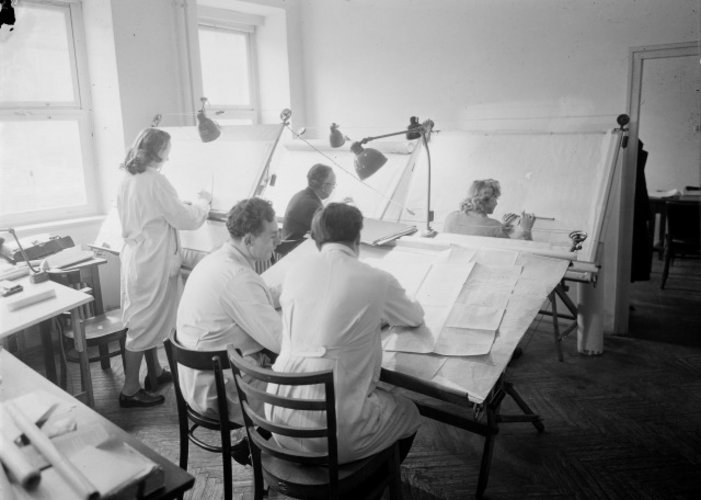
Feminist scholarship has for generations now contested the overexposure of singular designers in the histories of architecture and called for a greater understanding of how collaborations shaped and keep on shaping buildings, built environments and landscapes. This historiographical expansion allows for a much more diverse and rich understanding of who – and what – shaped our world, focusing not only on the ‘usual suspects’ of the canonized white man designer, but also involving other agents of change, such as women architects, residents, builders and others who are active parts of forming buildings, cities and landscapes. This workshop will ask: what methods and approaches are necessary to undertake this epistemological expansion and how can we deal with archival silences? The workshop will have an interactive format and is geared towards sharing reflections on methodological approaches and their limitations and potentials.
Workshop Program
13:00 Welcome
Panel with early career scholars on Methods for Researching Collaboration and Gender in the histories of Architecture, Landscape and Urban design
14:15 Exploring Collaborative Approaches. Presentations and discussion of recent publications
15:00 Informal Networking
Coordinators
Svava Riesto (University of Copenhagen)
Luca Csepely-Knorr (Liverpool University)
Contributing Members
Joy Burgess (University of Liverpool)
Alexander David Clark (University of Copenhagen)
Ruo Jia (Pratt Institute)
İpek Mehmetoğlu (University College Dublin)
Patricia Semeniuk (University of Kassel)
Anna Weichsel (Portland State University)
Architecture in Extremis: The Return of the Dual State
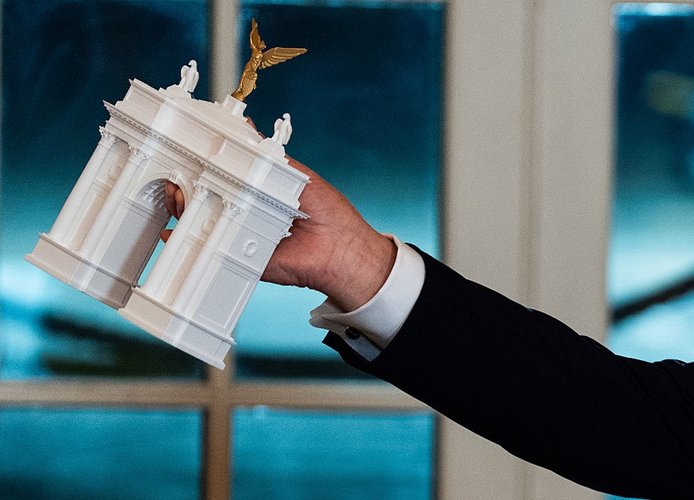
In 1938, the Jewish labor lawyer Ernst Fraenkel fled Berlin, with a manuscript he had secretly drafted. Published in English in 1941 as The Dual State, it described the Nazi regime as a system in which arbitrary power did not suspend the rule of law but operated through and alongside and within the ordinary apparatus of administration. The model has returned with force in recent readings of Erdoğanism, Putinism, and Trumpist America, and it sits productively next to a wider set of contemporary diagnoses: the hollowing of participatory democracy under oligarchic capture, the retreat of the state, the rise of neo- or techno-feudal rentierism, and the renewed political traction of messianic and eschatological theologies, from American evangelical and Zionist settler movements to Hindu nationalism in India. The workshop is conceived as a collective laboratory for formulating historical questions adequate to architecture in this moment of extremity: What role does architecture play within this reordering, and which ideological operations are at work in the buildings, territorial regimes, and visual cultures of an order in formation? How does architectural history write the present when the present resists the categories the discipline has inherited, and what becomes of heritage and its custodial claims? Which archives and periodizations still hold, and where might the field need to look beyond its established borders? A brief dossier will be circulated beforehand; the session will combine working discussion with planning for longer outputs, including a reader and a possible conference. Scholars working on any period or geography are welcome to participate and contribute to the discussion.
Workshop Program
12:00 Welcome and introductions
12:15 Short participant presentations
13:00 Break
13:15 Discussion and brainstorming
14:30 Concluding remarks and next steps
Coordinators
Alona Nitzan-Shiftan (Technion IIT, gta/ETH)
Demetra Vogiatzaki (gta/ETH)
Contributing Members
Kenny Cupers (University of Basel)
Maarten Delbeke (gta/ETH)
Vanessa Grossman (UPenn)
Meredith TenHoor (Pratt SoA)
Claire Zimmerman (University of Toronto)
Migration Pedagogies
This interest group session serves two purposes. The first is introductory: to meet current and new members, and present on-going research and projects in the area of migration and the built environment. We have been meeting monthly for two years, and this conference is an occasion to review those conversations and to reassess current and new directions for the group. The second purpose is a focused discussion of pedagogical topics, methods and goals. The aim is to explore together theories, concepts, readings, and assignments at the intersection of migration and architecture. We will pre-circulate sample syllabi as a starting point to a conversation that will also include subjects related to opportunities, such as summer schools, site visits, collaborative grants, public partnerships, etc. in the development of migration pedagogies and teaching subjects.
Workshop program
13:00 Welcome and introductions of meeting participants
Updates on research, workshops, symposia, conferences, and grant proposals
13:45 Overview of pedagogies dossier
14:00 Introduction and discussion of migration pedagogies
15:00 Closing remarks
Coordinators
Robin Schuldenfrei (Courtauld Institute, UCL)
Min Kyung Lee (Bryn Mawr College)
Contributing Members
Andrea Canclini (Lebanese American University)
Maria Louisa Palumbo (University Mohammed VI Polytechnic)
Olga Touloumi (Bard College)
Researching Housing in Bulk
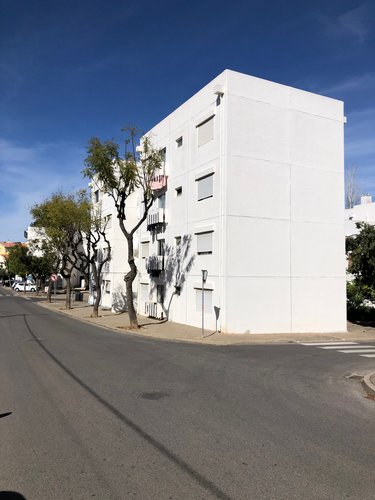
Housing is, par excellence, a matter of quantity. In every city, housing shapes the urban fabric through its sheer prevalence relative to other building types. Moreover, in contrast to other typologies (administrative buildings, malls, hospitals, universities, etc.), this vast majority of the world’s built environment is rarely a planned artifact. More often than not, it is driven by small-scale private initiative and developed both through formal and informal/illegal processes. Today, housing has become a financial asset—an investment sector produced through economic logics that rarely involve centralized planning. Despite its vastness and apparent banality, this output’s historical integration into real estate profit structures, the histories of its production, and the forms of domesticity it offers, are pivotal for addressing a range of important questions. These include, for instance, class formation, the material culture of a given community, the politics of consensus-building, and processes of social and gender inclusion (or exclusion). A critical historical perspective must therefore treat ‘housing in bulk’ as a valid object of inquiry. But how do we engage with such a vast and largely uncharted subject? In the absence of centrally maintained archives—whether state, municipal, or privately held by real estate companies—where can one turn to better understand housing in bulk? How can we approach such archives, when they exist, and the sheer scale of the data they might yield? Can we develop in-bulk research approaches that match in-bulk housing production? Previous meetings of the Interest Group on Housing (IGH) have explored research and writing tools, such as microhistory, that may prove relevant here; other valuable approaches might include oral history and emerging digital methods involving machine learning and GIS.
This year’s IGH meeting will explore these possibilities—both methodological and theoretical—without limiting the scope of inquiry, geographically or chronologically, with the aim of fostering new frameworks for understanding housing in bulk and its broader social, political, and economic implications. We encourage existing and prospective members to share their experiences, approaches and concerns, contribute to the discussion and envisage future developments for historical research on housing and its conditions of (mass) production.
Meeting Program
13:00-13:15 Welcome
13:15-13:45 Introductions by contributing members
13:45-14:15 Discussion
14:15-14:30 Closing remarks
14:30-15:00 Informal networking - end of meeting
Coordinators
Ricardo Costa Agarez (Iscte–University Institute of Lisbon)
Konstantina Kalfa (Institute for Mediterranean Studies / Athens School of Fine Arts)
Contributors
Miles Glendinning (University of Edinburgh)
Chiara Ingrosso (Università della Campania Luigi Vanvitelli)
Dana Vais (Technical University of Clui-Napoca)
Erasing Architecture: Past and Present Histories
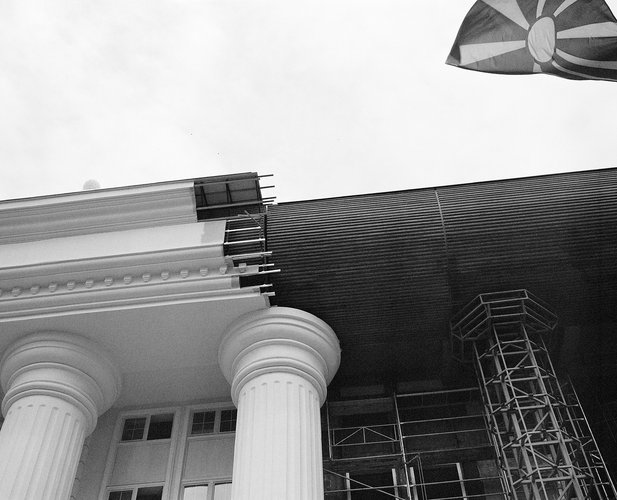
This meeting, titled “Erasing Architecture: Past and Present Histories,” focuses on the way artefacts—an object, a photograph, a text, a document, among others—speak of absence. Contributors are invited to introduce an artefact asking: How does it witness absence? Where do you situate the object within canonical architectural history? What history does absence tell? These fragments, as part of the contributors’ research, will be approached as traces of absence to unpack the hidden historical narratives embedded within them. The meeting will include one-slide presentations introducing the selected artefacts to be followed by a collective discussion on the problematics of writing through absence; the limits and possibilities of history and historiography in an unequal world that continues to create absences; the deontological risks around the erasure of architecture amid a global ongoing destructions; and challenges on methods when working with traces of erased architectures. As the first official meeting of this group as an EAHN Interest Group, the aim is to establish a shared ground for delineating critical methods and approaches as strategies to be further explored in the group’s following meetings.
Workshop program
11:00 Introduction of the Workshop’s theme and Update on the Group’s activities
11:15 ‘Object’ Pitches: A round of participants sharing their selected object and story behind the object
12:15 Collective Discussion on Methods, Approaches, and Challenges Working with Archival Fragments
12:50 Closing Reflections and Next Steps
13:00 Informal Networking
Coordinators
Savia Palate (University of Cyprus)
Linda Stagni (ETH Zurich)
Contributing Members
Alena Beth Rieger (The Oslo School of Architecture and Design)
Chenchen Yan (Princeton University)
Claire Zimmerman (University of Toronto)
Elettra Carnelli (ZHAW Zurich University of Applied Sciences)
Fabio Gigone (Centre for Privacy Studies - University of Copenhagen / DIS - Study Abroad in Scandinavia)
Laurent Koetz (École d’architecture de la ville & des territoires Paris-Est)
Nele De Raedt (UCLouvain)
Sean Silvia (Princeton University)
Yosuke Nakamoto (ETH Zurich)
The Historic City Renegotiated: Intersections of Postmodern Architecture and the Preservation Movement
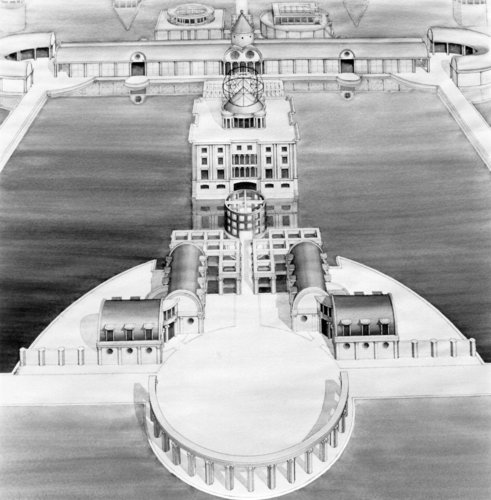
Against the background of the anti-demolition protests and preservation activism of the 1970s—such as the public outcry following the demolition of Les Halles in Paris in 1971, the Covent Garden Redevelopment protest march in 1972, and the Amsterdam Nieuwmarkt Riots of 1975—a segment of what we now call postmodern architecture strategically aligned itself with a broader shift in urban renewal discourse toward the preservation of historic city centres. Then perceived as a victory for heritage conservation over radical urban redevelopment schemes, the European Architectural Heritage Year of 1975 marked a high point in the attention given to the preservation of townscapes and city quarters. The European Charter of the Architectural Heritage and the Amsterdam Declaration, which advocated the recognition of heritage conservation as an integral part of urban planning, profoundly influenced conservation and planning policies across Western European countries. On the other side of the Iron Curtain, very similar approaches to shaping heritage policies were employed alongside holistic urban renewal schemes. This pan-European discourse, centred on the notion of “integrated urban conservation,” also addressed emerging social and environmental concerns regarding living conditions and the so-called “milieu” of existing structures. In response to these policy objectives, postmodern architects deployed a range of design strategies to adapt to historical contexts and to counter the perceived inability of contemporary architecture to engage with the cultural identity of the historic city.
The 2026 EAHN PoMo Interest Group Meeting seeks to re-evaluate the complex relationship between the preservation movement and that strand of postmodern architecture situated within historic urban settings. At a moment when the heritagization of postmodern buildings continues to spark controversy, the meeting proposes to revisit contested postmodern designs as they sought to engage with newly integrated environmental, preservation, and planning politics. It aims to give due historiographical weight to the ways in which various neo-historical approaches to architecture and urban design were interwoven with the negotiation of urban conservation policies—and to the skepticism that these approaches provoked among conservators regarding postmodernism’s historicist stance.
Roundtable Program
13:00 Welcome and Introductions
13:15 Short presentations by participants
14:00 Discussions
15:00 Informal Networking
Meeting Organizers
Kirsten Angermann (Bauhaus-Universität Weimar)
Wouter Van Acker (Université libre de Bruxelles)
Contributing Members
Frida Grahn (London South Bank University )
Amanda Reeser Lawrence (Northeastern University)
Janina Gosseye (TU Delft)
Isabelle Doucet (University of Sheffield)
Ilaria Zedda (RWTH Aachen University)
Florian Urban (The Glasgow School of Arts)
Introductory Meeting and Open House
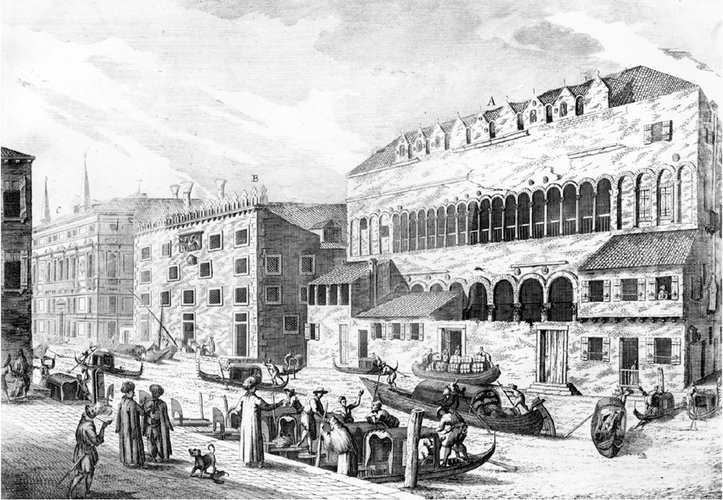
The Mediterranean has been widely employed as both a geographical and conceptual framework by art, architectural and urban historians. But there is still much to explore: The Connective Histories of the Eastern Mediterranean Special Interest Group seeks to bring together scholars and practitioners in EAHN to critically explore the interconnectedness between Europe and the Mediterranean Rim as a place of intercultural mobility and exchange. It focuses on the Eastern Mediterranean where diverse cultures and communities of Europe, the Balkans, North Africa, and the Middle East have interacted throughout centuries. The interest group aims to explore the hitherto understudied aspects of their dynamic relationship and how the Mediterranean, as a physical reality but also an elusive notion, played a part in the formation of the built environment across the region. This will be the first meeting of the “Connective Histories of the Eastern Mediterranean” special interest group. Our aim is to introduce us and the recent work by our members to EAHN members and conference participants.
Meeting Program
11:00 Welcome and introduction
11:10 Short presentations by the group members on their recent work
11:40 Discussions
12:30 Informal networking
Coordinator
Belgin Turan Özkaya (Middle East Technical University)
Contributing Members
Belgin Turan Özkaya (Middle East Technical University)
Konstantina Kalfa (ASFA)
Fatma Tanış (TU Delft)
How did we get here and where are we heading? Assessing the field of urban representation
‘The Past in the Present’ is the theme of the EAHN conference in Aarhus in 2026 – in response, the Urban Representations Interest Group is seeking to briefly review its conversations and activities to date, to learn about ongoing projects, and ultimately to reflect upon the current and future shape of our shared field of inquiry.
Our event at Aarhus will be in two sections, with an emphasis on participation and interaction. Following a short overview of the group’s wide-ranging activities over the past fifteen years – at the biennial conference of the EAHN since 2010, but also at the annual meetings organized by the Associazione Italiana di Storia Urbana (AISU) – our workshop will take the form of an open-ended conversation, designed to generate discussion among individuals working on subjects within the wide rubric of urban representation, and reflecting on sources, interpretive lenses, methodologies, technologies, positionality and visual media.
This workshop aims to gather questions and positions on areas including, but not limited to, ongoing avenues of research, critical reflections on current reading, and new or forthcoming publications and projects in the field of urban representation. Attendees will have an opportunity to speak briefly in an informal setting while simultaneously generating responses, connections, parallels and contrasts among their peers.
Workshop Program
11:00 Welcome and introduction
11:10 Brief participant contributions: current research, readings, publications, and projects
11:45 Collective discussion: responses, connections, parallels, and contrasts
12:45 Closing remarks and planning next steps
Coordinators
Miriam Paeslack, University at Buffalo (USA)
Ines Tolic, University of Bologna (Italy)
Contributing Members
Lisa Godson (National College of Art and Design)
Conor Lucey (University College Dublin)
John Montague (American University of Sharjah)
Freek Schmidt (Vrije Universiteit Amsterdam)
