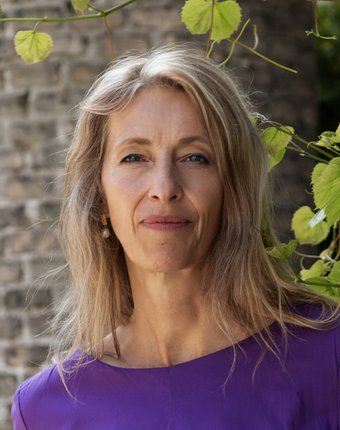
Since 2009 full Professor of Landscape Architecture at the University of Copenhagen, Denmark, where she leads the research group Landscape Architecture and Urbanism. Her research focuses on 20th-century urban landscapes and open spaces, exploring their historical formation, cultural significance, and ongoing transformation. Bridging design practice and the humanities, she examines how modern landscapes—especially post-industrial, and welfare-state environments—can be preserved, adapted, and regenerated as key resources for future urban development. Alongside her academic work, she is actively engaged in contemporary landscape architecture and urban development practice, participating both as a competition team member and as a jury member in national and international contexts. She has published widely, including Beauty Redeemed: Recycling Post-Industrial Landscapes (2015); the Routledge Research Companion to Landscape Architecture (2018, co-edited with Steiner); Den Grønne Kulturarv (2019); Urban Planning in the Nordic World (2022); and Architecture and Welfare: Scandinavian Perspectives (2025, co-edited with Arrhenius and Ruud). ORCID: 0000-0003-1516-2507
Lecture Title and Abstract
In the Nordic countries, welfare has long held a defining cultural and political role. In the post-war decades, architecture and planning were central to materialising welfare-state ideals—both as physical frameworks and as organisational systems shaping “the good life.” The outcomes of this expansive urbanisation continue to structure everyday environments, meaning that future development will largely have to unfold within this inherited spatial and material framework. This prompts critical questions about how such environments foregrounding landscape as a key social and ecological medium are understood: as cultural heritage, as evolving systems, and as lived landscapes. Characterised by horizontality, openness, and integrated green structures, the post-war fabric foregrounds landscape as a key spatial, social and ecological medium. Taking the Nordic—and particularly Danish—context as its point of departure, the keynote will revisit and critically nuance dominant narratives of post-war welfare (landscape) architecture, challenging enduring myths while engaging ongoing reinterpretations. Held within Aarhus University Campus, the talk also reflects on its growing recognition as cultural heritage. Landscape and welfare thus serve as lenses for understanding both past ambitions and future possibilities.

Department Chair and Professor of the History of Art and Architecture at Brown University. Her research focuses on the relationship between political ideologies and the built environment in Sub-Saharan Africa, the Anglo-Caribbean, and Central Europe between 1750 and 1950. She is the author of Africa’s Buildings: Architecture and the Displacement of Cultural Heritage (Princeton University, 2025) and Colonialism and Modern Architecture in Germany(Pittsburgh, 2017); editor of German Colonialism in Africa and its Legacies: Architecture, Art, Urbanism, and Visual Culture (Bloomsbury, 2023); and co-editor of Routledge Companion to Critical Approaches in Race and Architecture (Bloomsbury, 2025). The winner of the 2020 Schelling Foundation Prize for Architectural Theory, Osayimwese’s research has been funded by the Andrew Mellon Foundation, Canadian Center for Architecture, Gerda Henkel Foundation, Graham Foundation for the Fine Arts, and National Endowment for the Humanities, among others. Her current research explores Western expropriation of Africa's architectural heritage; the problem of translation in the historiography of African architecture; and migration, property, and emancipation in the Anglo-Caribbean. Osayimwese received a Ph.D. in the history and theory of architecture from The University of Michigan, Ann Arbor.
Lecture Title and Abstract
This lecture considers how architectural historians can approach their work when archives and material traces of the built environment are absent or hidden. Taking case studies from a field that contends regularly with this problem -- Africanist architectural history – I explore speculative history and critical fabulation as pathways for writing “otherwise-possible” histories not only when our conventional methods fail, but also as an intentional alternative to the linear, univocal, synthesizing narratives that we take as our norm.
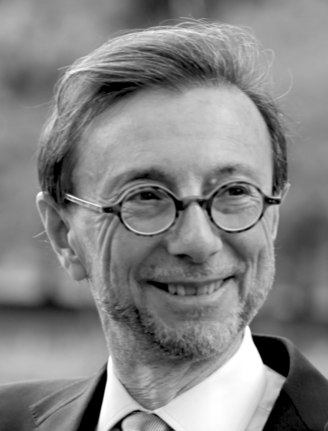
Reyner Banham Professor of Architectural Theory and History, the Bartlett School of Architecture, UCL London; Gao Feng Professor (part-time), College of Architecture and Urban Planning, Tongji University, Shanghai. Mario Carpo, Guggenheim Fellow in 2022-23, was the Head of the Study Centre at the Canadian Centre for Architecture in Montréal from 2002 to 2006, Vincent Scully Visiting Professor of Architectural History at the Yale School of Architecture from 2010 to 2014, Senior Scholar in Residence at the Getty Research Institute (2000-2001); Resident at the American Academy in Rome (2004), etc. Mr. Carpo's research and publications focus on the history of early modern architecture and on the theory and criticism of contemporary design and technology. His award-winning Architecture in the Age of Printing (MIT Press, 2001) has been translated into several languages. His most recent books are The Alphabet and the Algorithm (2011); The Second Digital Turn: Design Beyond Intelligence (2017); and Beyond Digital. Design and Automation at the End of Modernity (2023), all published by the MIT Press.
Lecture Title and Abstract
Generative AI does not create new images out of thin air; it generates images that have a “certain something” in common with a selection of images we have fed into it. This selection, often called a dataset, can be generic or custom-made; either way, Generative AI automates the imitation and replication of some of its common visual features. In the past, these common visual features used to be called a style. Imitation and styles were for centuries the backbone of the classical tradition in European art, but both terms were de facto banned by 20th-century modernism. Reference to precedent in modernist art, when acknowledged, was generally reframed as collage, citation, intertextuality, assemblage, or pastiche. But none of these terms describes the technical logic of today's Generative AI. As the rise of Generative AI is bringing the practice of stylistic imitation back to our design schools and to the design professions, we urgently need to learn again what imitation is, how it works, what it does, and how we can deal with it today, in critical and creative terms.
